
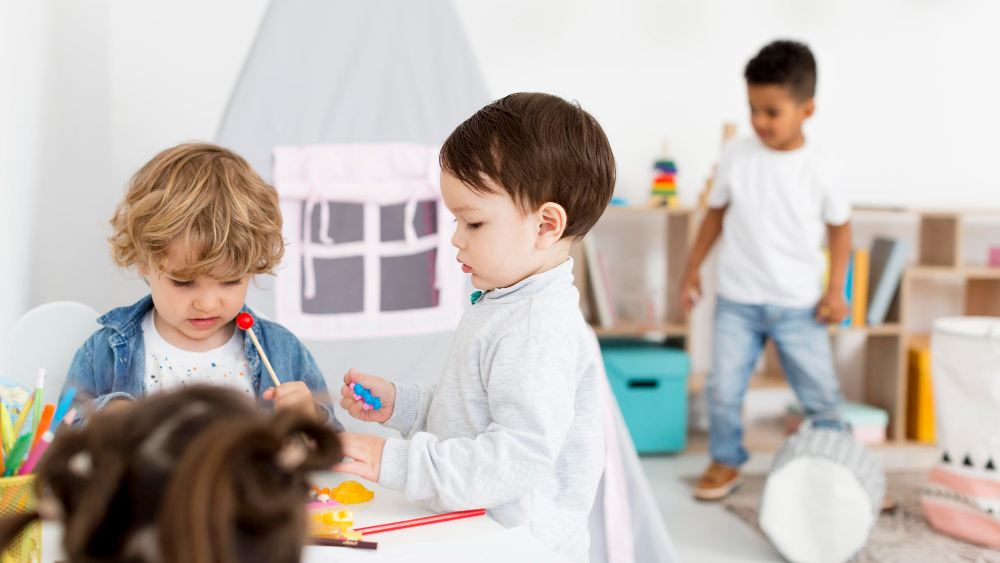
The early years of a child’s life play a crucial role in shaping how they learn, communicate, interact, and respond to the world around them. For parents, choosing the best preschool in Abu Dhabi is therefore about more than finding a place where children can spend their mornings. It means finding a nurturing environment that supports their cognitive, social, emotional, physical, and creative development.
Early childhood education provides children with their first structured learning experiences while allowing them to explore, play, ask questions, and develop independence. A thoughtfully designed preschool can help children build the confidence and foundational skills they need for their future education.
Quick Answer: Early childhood education builds the foundations for communication, social interaction, emotional development, creativity, problem-solving, and early academic skills. When choosing a preschool, parents should consider the curriculum, educators, safety, learning environment, individual attention, play opportunities, and communication with families.
Why Early Childhood Education Matters
Early years are a period of rapid development. Children are constantly learning through their environment, interactions, play and discussion. They have opportunities to develop these abilities at an age-appropriate level, not just through formal academic work, but with a quality early education program.
Preschool also introduces children to routines and group settings. Learning to share with teachers and classmates can help children become more listenable, wait for a turn, follow simple instructions, express feelings, and interact comfortably in structured educational environments.
Building Social and Emotional Skills
Children have opportunities in a preschool classroom to interact with others outside the family. Children gradually develop the skills to communicate their needs, to cooperate with others, to settle minor conflicts and initiate friendships through group activities, collaborative games, story time and free play.
Emotional development is also important. A supportive teacher can help children recognize and communicate their emotions and support them to learn to be more independent. These experiences can help to build confidence and enable children to deal with new situations as they move through their learning.
Developing Early Academic Foundations
Preschool does not have to resemble a primary school classroom to prepare children academically. Basic tasks like letter recognition, listening to stories, counting objects, shape recognition, sorting of materials, and pattern recognition can be used to engage children in an interesting way with basic concepts.
More focus should be on understanding and not on memorizing. Early literacy and numeracy skills can be developed with children’s curiosity when they are learning through stories, games, movement, music, creative activities and hands-on exploration.
The Importance of Play-Based Learning
Play is one of the most normal means of learning for young children. Building blocks can stimulate problem solving, pretend play can aid communication and imagination and puzzles and matching games can foster concentration and logical thinking. Physical play also helps with coordination and motor skills development.
A strong preschool does not treat play as separate from education. Instead, teachers can use play intentionally to introduce concepts, encourage communication, develop social skills, and help children explore their interests. This approach can make learning feel enjoyable rather than pressured.
Key Takeaway: For young children, learning and play should work together. The strongest early learning environments create opportunities for children to explore, communicate, create, move, and solve problems while receiving guidance from caring educators.
What Should Parents Look for When Choosing a Preschool?
A search for a preschool in the nearby area, may be convenient as a first step but distance is not the only factor to consider. Parents should consider the quality of the learning environment, learning approach, safety procedures, facilities, daily routine and educators’ interactions with the children.
It is also worth visiting shortlisted schools in person. A campus visit allows parents to observe the classrooms, speak with teachers, understand the daily schedule, and get a better sense of whether the environment feels welcoming and suitable for their child.
1. Age-Appropriate Curriculum
The curriculum should focus on the needs of young children. Academic pressure should not be placed on children, but rather, the introduction of academic skills through fun and age-appropriate activities.
Smartyca’s preschool program is based on the British EYFS (Early Years Foundation Stage) framework and is a mixture of both structured learning and play-based. The program enables the support of areas like early literacy, numeracy, communication, creativity and social development.
2. Caring and Qualified Educators
Teachers have a significant influence on a child’s early educational experience. Parents should look for educators who are patient, attentive, encouraging, and capable of recognising that children develop at different rates.
Questions about teacher qualifications, the size of classrooms, teacher-child interactions and how teachers support children who might take longer to feel at home in a new setting are helpful.
3. Safe and Stimulating Environment
Children need to be secure to explore and learn. The Homework environment in the classrooms should be clean, well-organized, age appropriate and should make it a place where children are encouraged to be active participants in the learning process.
Parents can also enquire about supervision, emergency protocols, hygiene protocols, entry and exit, and outdoor play areas. A safe setting enables children to explore and gives parents peace of mind.
4. Individual Attention
All children have varying interests, abilities, personalities and learning preferences. A good preschool will understand these variations and not assume that all children will develop in the same way.
One-to-one sessions can enable teachers to know where a child is succeeding and where a little more encouragement might be needed. This can also help children build confidence without the pressure of a comparison to their peers.
5. Parent-School Communication
Parents need to be updated on what their child has learned and what she has achieved. Frequent communication with parents and family members can assist families in understanding what children are learning, activities that are enjoyed and if there are areas that require further support for children.
Parents can ask prior to enrolment how to be notified of the school’s updates and how often teachers will contact parents. Effective communication develops a partnership between parents and educators.
Comparing Different Early Learning Approaches
While looking for preschool programs, parents may find that there are various teaching methods they will come across. While labels are an important consideration, it is crucial to have insight into children’s daily learning experiences.
| Factor | Traditional, Teacher-Led Approach | Play-Based, Child-Centred Approach |
|---|---|---|
| Learning style | Mainly teacher-directed | Guided exploration |
| Activities | Structured lessons | Games, play and hands-on activities |
| Child participation | Follows instructions | Encouraged to explore and participate |
| Academic preparation | Strong focus on early academics | Academic skills developed through activities |
| Creativity | Often separate activities | Integrated into daily learning |
| Social development | Primarily group activities | Interaction through play and collaboration |
| Learning pace | More structured | Adapted to developmental needs |
A quality preschool can include elements of structure while still giving children sufficient freedom to explore. The key is finding a balanced environment where children receive guidance without losing opportunities for curiosity and independent discovery.
Why Location and Routine Matter
Convenience can make a difference to a family’s daily routine. Parents comparing pre-kg schools in Abu Dhabi should consider travel time, drop-off and pick-up arrangements, traffic, operating hours, and whether the location fits comfortably into their schedule.
A manageable commute can also make the preschool experience easier for children. Consistent routines can help young learners know what to expect each day and gradually become comfortable with their new environment.
Preparing Children for the Next Stage
School readiness involves much more than knowing letters and numbers. Children also need to develop independence, communication, listening skills, social confidence, concentration, and the ability to participate in classroom routines.
Preschool can gradually prepare children for these expectations. Activities such as tidying up after play, following a daily schedule, participating in group discussions, completing simple tasks, and making choices can help children become more independent learners.
For parents comparing kindergarten in Abu Dhabi options, understanding how a preschool supports this transition can be particularly useful. The goal should be to create a foundation that allows children to approach their next educational stage with confidence.
Why Parents Can Consider Smartyca
Smartyca’s goal is to provide a children-focused learning space that enables children to learn through exploration, interaction, structured activities and play. The preschool program is structured to help build the foundations for children’s learning and to help them learn to be confident and curious.
The program provides opportunities which help children develop early literacy, numeracy, creativity, communication and social development. When parents are considering nearby play schools, they may want to consider how these skills are integrated into the activities.
Parent Tip: Don’t make your decision based only on a website or online reviews. Visit the preschool, observe how teachers interact with children, ask about the daily routine, and discuss how the school supports individual development.
Questions to Ask Before Enrolling
Before making a final decision, parents can prepare a few questions for their shortlisted preschools. These can help them compare schools based on factors that directly affect their child’s experience.
- What curriculum or educational framework does the preschool follow?
- What does a typical day look like?
- How are children supported while settling into preschool?
- How does the school monitor children’s development?
- How frequently do teachers communicate with parents?
- What safety and hygiene measures are followed?
- How much time is dedicated to outdoor and creative activities?
- How does the preschool prepare children for the next stage of education?
FAQ
What age is suitable for starting preschool?
There is no universal age that works for every child. Readiness can depend on a child’s independence, communication skills, comfort with group settings, and ability to participate in simple routines. Parents should consider their child’s individual development when deciding when to enrol.
What skills should children develop in preschool?
Preschool should support a broad range of skills rather than focusing only on academics. These include communication, social interaction, emotional development, creativity, physical coordination, independence, early literacy, and numeracy.
Is play-based learning suitable for preschool children?
Yes. Play gives children opportunities to learn through exploration, experimentation, movement, storytelling, role play, puzzles, construction, and social interaction. When teachers guide these experiences intentionally, play can support several areas of development at the same time.
How can parents choose the right preschool in Abu Dhabi?
Parents should compare the curriculum, educators, safety standards, learning environment, location, class structure, daily routine, and approach to child development. Visiting the school and speaking with teachers can provide a clearer picture than online information alone.
What curriculum does Smartyca follow?
Smartyca follows the British EYFS framework for its preschool programme. The approach combines structured learning and play-based experiences while supporting children’s early academic, social, creative, and communication skills.
Give Your Child a Strong Start
Choosing a preschool is one of the first important educational decisions parents make. The right environment can help children develop curiosity, confidence, independence, communication, and a positive attitude towards learning while allowing them to enjoy their early years.
For families searching for the best preschool in abu dhabi, the decision should go beyond reputation or convenience. Consider how the preschool approaches learning, how teachers interact with children, whether the environment is safe and stimulating, and whether the programme gives every child opportunities to develop at their own pace.